Pre-Operation Safety Checks
Before starting work, conduct a thorough safety inspection.
Check all hydraulic hoses for wear, abrasion, and leaks.
Verify that all mounting bolts are torqued to specification.
Inspect the chisel for cracks or excessive wear. Ensure the quick coupler is securely locked.
Test the emergency stop function.
These checks take less than ten minutes but prevent the majority of safety incidents.
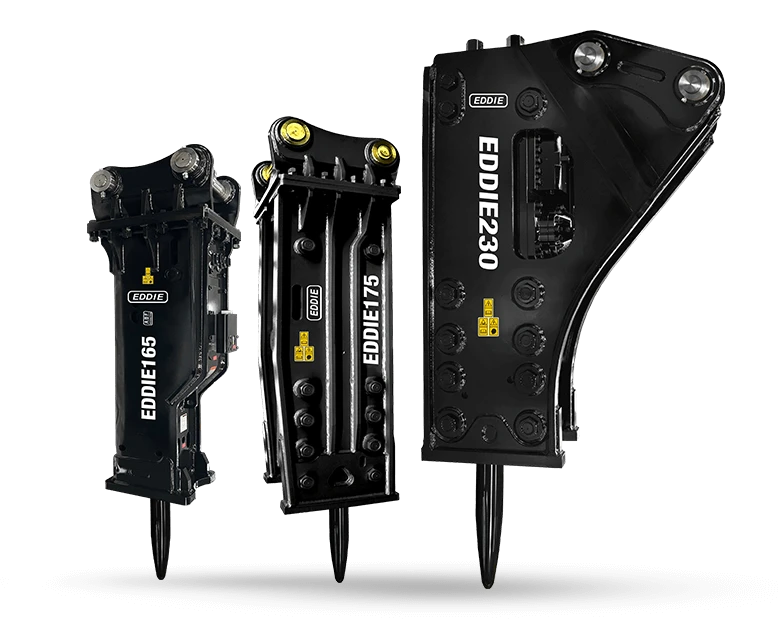
Personal Protective Equipment
All personnel in the breaker work area must wear appropriate PPE.
This includes hard hats, safety glasses with side shields, steel-toed boots, high-visibility clothing, and hearing protection. The noise level near an operating breaker can exceed 100 dB, well above the threshold for hearing damage.
For operators in the cab, ensure the cab is properly sealed and sound-dampened.
Provide hearing protection for ground workers within 30 meters of the operation.
Maintain Safe Operating Distance
Establish a clearly marked exclusion zone around the operating breaker.
The minimum safe distance is 30 meters for ground personnel.
Flying debris can travel much farther than expected, especially when breaking hard, brittle materials. Use barriers, warning tape, and signage to define the zone.
Assign a spotter when working in confined areas or near public access.
The operator must have clear visibility of the entire exclusion zone.
Never Blank Fire the Breaker
Blank firing, or operating the breaker when the chisel is not in contact with material,
is one of the most damaging and dangerous practices.
Each blank fire sends shock waves through the breaker’s internal components,
accelerating wear and potentially causing catastrophic failure.
The shock can also damage the excavator’s boom and linkage.
Train operators to always maintain firm contact between the chisel and the material before pressing the trigger.
Underground Utilities Awareness
Before any ground-level breaking, obtain utility maps and verify the location of underground services.
Gas lines, water mains, electrical conduits, and fiber optic cables can be devastating if struck.
Use cable avoidance tools to confirm utility locations.
When in doubt, hand-dig to expose utilities before mechanical breaking.
Establish a “permit to break” system for areas with known underground services.
Managing Noise and Vibration
Extended exposure to breaker vibration can cause hand-arm vibration syndrome in operators,
even through the excavator controls.
Ensure the excavator seat and controls are properly dampened.
Limit continuous operation to two-hour shifts with breaks.
For noise management in urban areas, use silenced breaker models.
Schedule noisy operations during permitted hours and notify nearby residents and businesses in advance.
Emergency Procedures
Every site should have documented emergency procedures for breaker operations.
This includes response to hydraulic hose bursts (which can release high-pressure fluid), chisel ejection (rare but possible with severely worn equipment),
and structural collapse during demolition.
Ensure all operators know how to shut down the excavator and breaker quickly.
Maintain a first aid kit on site and ensure at least one person is trained in first aid. Conduct regular emergency drills.
Conclusion
Safety is not optional when operating hydraulic breakers.
By following these best practices, you protect your most valuable assets: your people and your equipment.
A strong safety culture also improves productivity by reducing downtime from accidents and equipment damage.
For comprehensive safety training resources and equipment inspection services, contact our team.
 English
 简体中文
简体中文
 العربية
 Tiếng Việt
 Hindi
Hindi
 Español
 Deutsch

Live A Message